
How to Choose a Hair Transplant Clinic in Turkey: 7 Things You Must Check
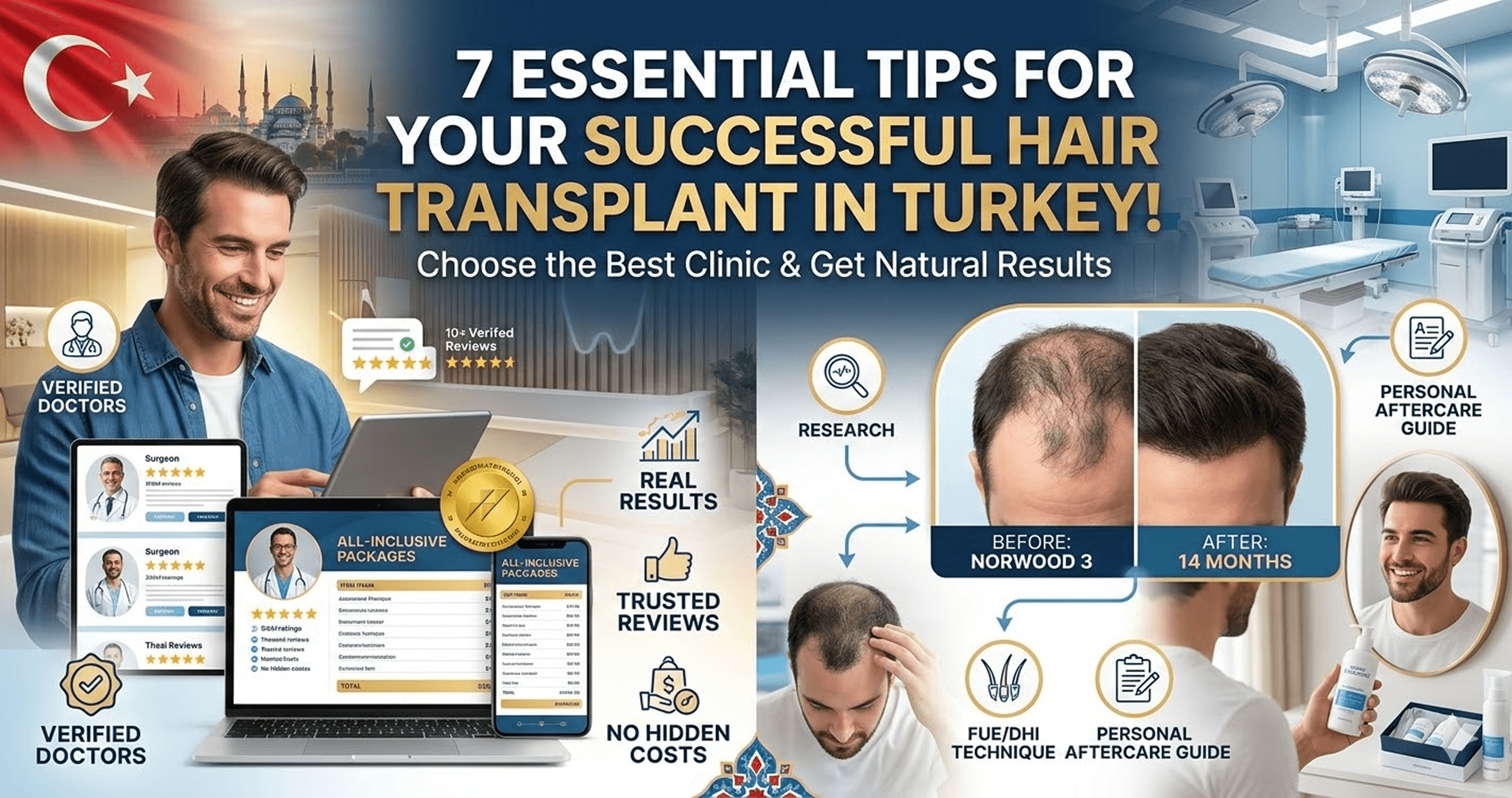
Not all clinics are equal. Here are the 7 things every international patient must verify before choosing a hair transplant clinic in Turkey.
Turkey is home to more than 600 hair transplant clinics. However, not all clinics offer the same level of quality or expertise.
Every year, thousands of international patients travel to cities such as Istanbul, Ankara, and Antalya for affordable and high-quality procedures. While many patients achieve life-changing results, some return home disappointed because they chose the wrong clinic.
The difference between a successful hair transplant and a costly mistake often comes down to a few critical factors. Before booking your procedure, make sure you check the following seven things carefully.
1 Verify the Surgeon’s Credentials
The first question you should ask any clinic is simple.
Who will actually perform your surgery?
In Turkey, certain parts of a hair transplant procedure can legally be delegated to technicians. However, reputable clinics always have a qualified surgeon supervising and leading the operation. This surgeon is typically a plastic surgeon or dermatologist specializing in hair restoration.
What to check
The surgeon’s full name should be publicly available
Their medical license should be verifiable
They should be registered with the Turkish Medical Association
Their professional history should be visible on LinkedIn or the clinic’s website
Be cautious if a clinic only refers to “our team” without identifying a lead surgeon.
2 Study the Before and After Gallery Carefully
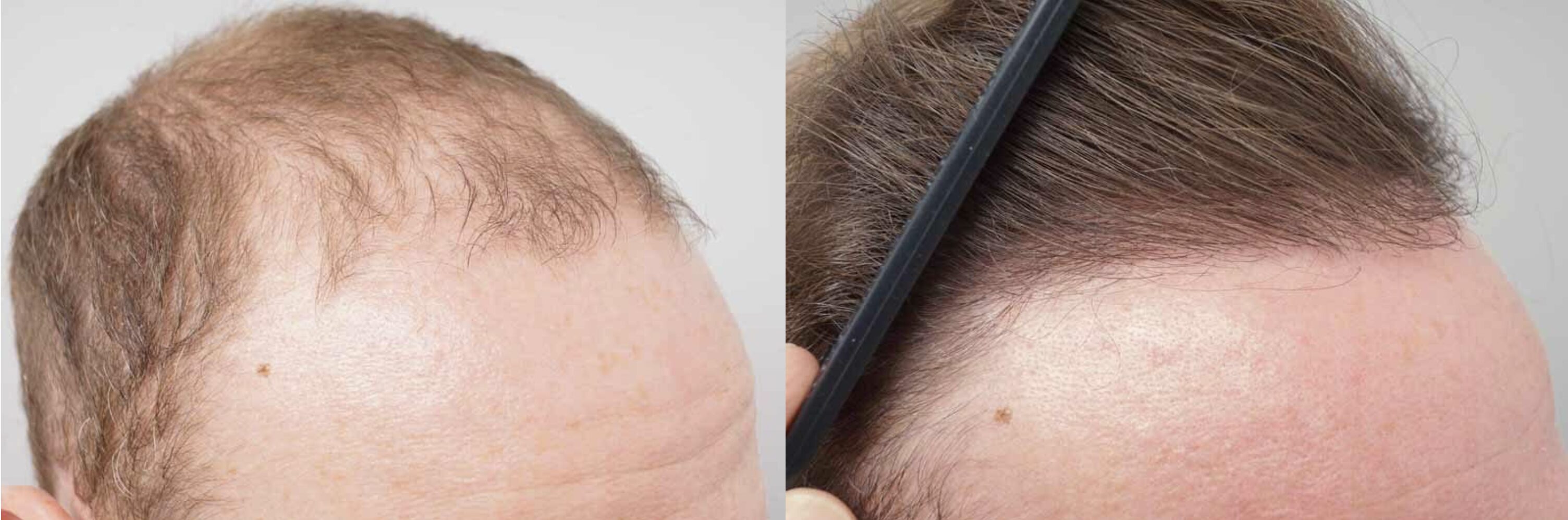
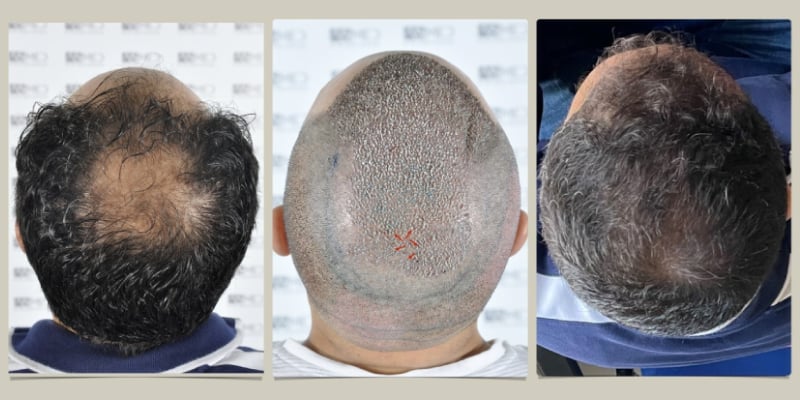
One of the most important indicators of a clinic’s quality is its before and after gallery.
A trustworthy clinic should provide numerous examples of real patients with clear photos taken months after the procedure.
What to look for
Photos taken at least 12 months after surgery
Similar hair loss patterns to your own
Consistent lighting and camera angles
Natural results rather than overly perfect outcomes
Stock photos, blurry images, or unrealistic results are common warning signs.
Video testimonials from real patients are often even more reliable than written reviews.
3 Understand Exactly What Is Included in the Price
Hair transplant packages in Turkey are well known for their value. However, the meaning of “all-inclusive” varies between clinics.
Before paying any deposit, you should receive a transparent breakdown of everything included.
A complete package typically includes
Pre-operative blood tests
Hairline design consultation
The procedure itself (FUE or DHI)
Hospital or clinic stay on surgery day
Medications and hair care kit
Airport transfers
Hotel accommodation for two or three nights
Post-operation follow-up
Always ask the clinic whether additional grafts will incur extra charges if more are required than originally estimated.
4 Check Google Reviews Carefully
Many clinics highlight their star rating. However, the number and recency of reviews matter just as much as the rating itself.
Top clinics in Istanbul often have thousands of reviews accumulated over several years.
How to evaluate reviews
Filter by most recent reviews
Read the 3-star reviews, which tend to be more balanced
Look for reviews from patients with a similar background or hair type
Be cautious if dozens of 5-star reviews appear within a short period
It is also useful to cross-check reviews on platforms such as Trustpilot and RealSelf.
5 Ask About the Aftercare Protocol
The success of a hair transplant depends not only on the surgery itself but also on the care that follows.
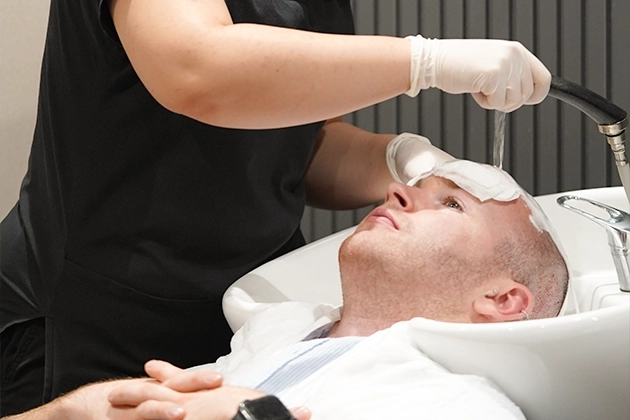
During the first 10 to 14 days, transplanted grafts are extremely delicate. Washing technique, sleeping position, and scalp protection all influence graft survival.
Aftercare you should expect
Detailed day-by-day washing instructions
Medication list and hair care products
Guidance on physical activity and sun exposure
A contact channel such as WhatsApp or email
Follow-up checks at one month, six months, and twelve months
6 Confirm the Technique and Graft Estimate in Writing
Before traveling to Turkey, make sure the clinic confirms all important details in writing.
This should include:
The technique used (FUE or DHI)
Estimated graft count
Name of the surgeon performing the procedure
Total cost of the procedure
Warning signs
A clinic quoting a price without evaluating your hair loss
No written confirmation of the surgeon
Vague promises such as “up to 4,000 grafts”
Pressure to pay a deposit immediately
A reliable graft estimate should be based on a photo or video consultation.
7 Look for Accreditation and Facility Standards
Finally, check where the surgery will actually take place.
Some clinics operate within fully equipped hospitals, while others use smaller surgical suites. Both can be safe if they meet medical standards.
One of the most respected international healthcare certifications is
Joint Commission International (JCI).
What you should verify
Whether the facility has international accreditation
Sterile operating conditions
Proper anesthesia and emergency protocols
A medical report provided after the procedure
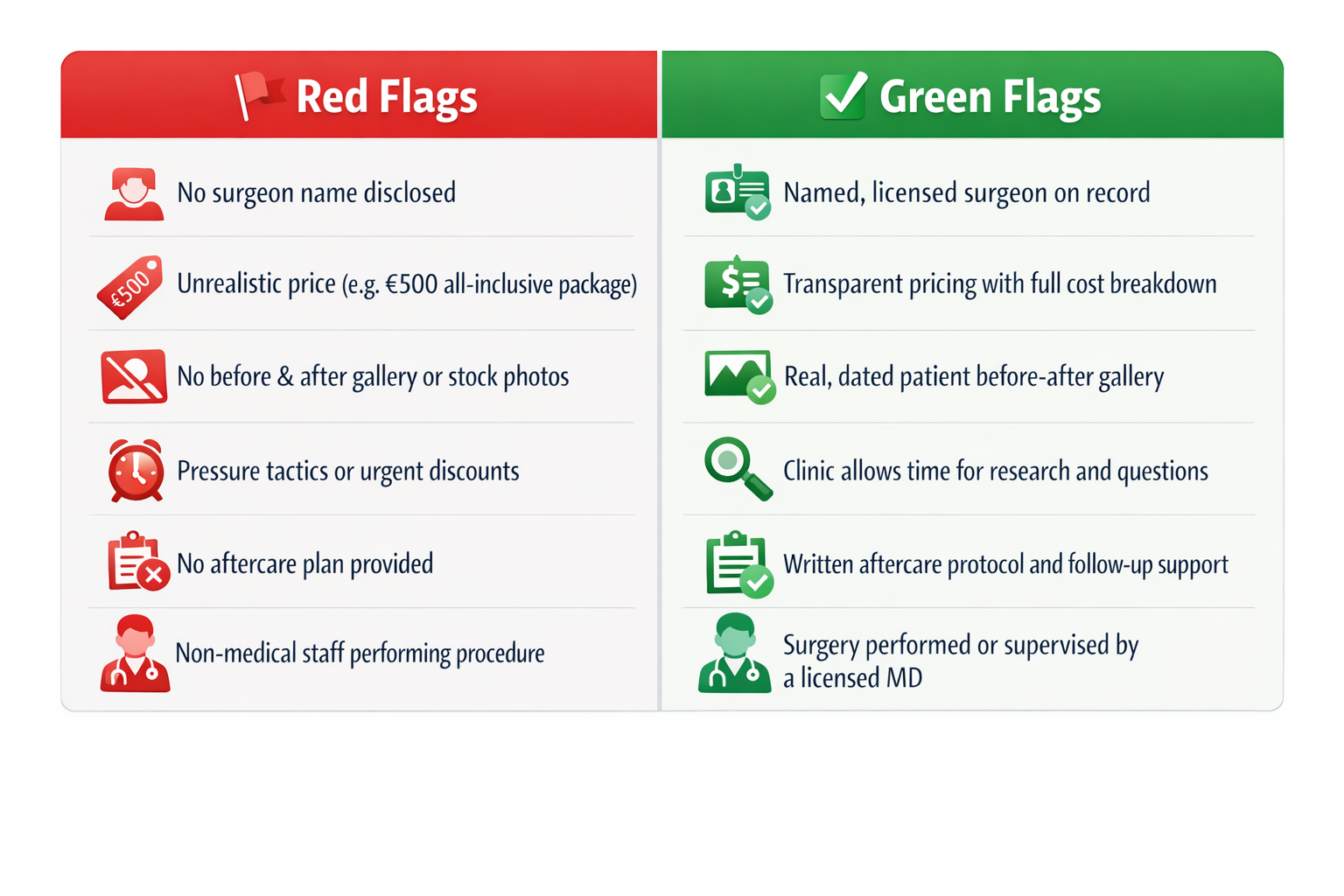
Red Flags vs Green Flags
How transplanthair.co Helps You Compare Clinics
On transplanthair.co, every listed clinic includes:
Verified Google rating
Total review count
Techniques offered (FUE, DHI, FUT, Beard, Eyebrow)
Location and city information
Direct links for deeper research
Instead of spending hours comparing clinics on different websites, you can filter clinics by technique, location, and rating in one place.
Frequently Asked Questions
Is it safe to get a hair transplant in Turkey?
Yes, if you choose a licensed clinic with an experienced surgeon. Turkey performs more hair transplant procedures than any other country.
How many grafts do I need?
Most patients require between 2,000 and 5,000 grafts, depending on their Norwood scale level.
How far in advance should I book?
Highly rated clinics in Istanbul are often booked 4 to 8 weeks in advance.
What if I have questions after returning home?
Reputable clinics offer remote aftercare. They review photos, answer questions via WhatsApp, and provide guidance during recovery.